Description
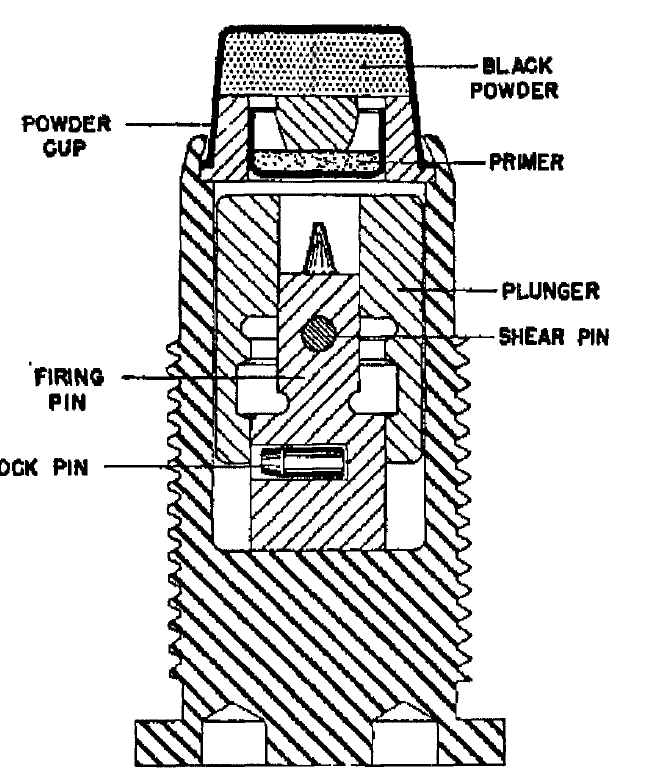
The fuze consists of a brass fuze body housing a firing pin and a plunger assembly. The firing pin and plunger are locked together by a copper shear pin, in the unarmed position. A primer and black powder magazine are crimped to the upper end of the fuze body.
No anti-creep spring is incorporated in the assembly of this fuze. Once setback has ceased and the plunger and firing pin are locked together by the lock pin, there is nothing present in the fuze to prevent their movement forward toward the primer.
Functioning
When the projectile is fired from the gun, the force of setback drives the plunger back toward the head of the fuze, shearing the copper pin locking the plunger to the firing pin. When the plunger has moved back sufficiently, the lock pin in the firing pin is caused by centrifugal force to move into the groove cut in the interior of the plunger body. The two units are again locked together, but the plunger is now in the lower position. On impact, inertia forces both the plunger and the firing pin forward, driving the firing pin into the primer and initiating the black powder ignition charge. This fires the black powder/TNT main charge in the projectile.
Hazardous Components
No information about hazardous components.
See Also
Nothing else to see.
Source(s)
MIL-HDBK-146, Fuze Catalog (1982)
OP 1664, Volume 1 - US Explosive Ordnance (1947)
