|
US Projectile, 155mm Chemical, Mk II, Mk IIA1, Mk IIA1 Mod 1, Mk VII, Mk VIIA1 |
Scroll Prev Top Next More |
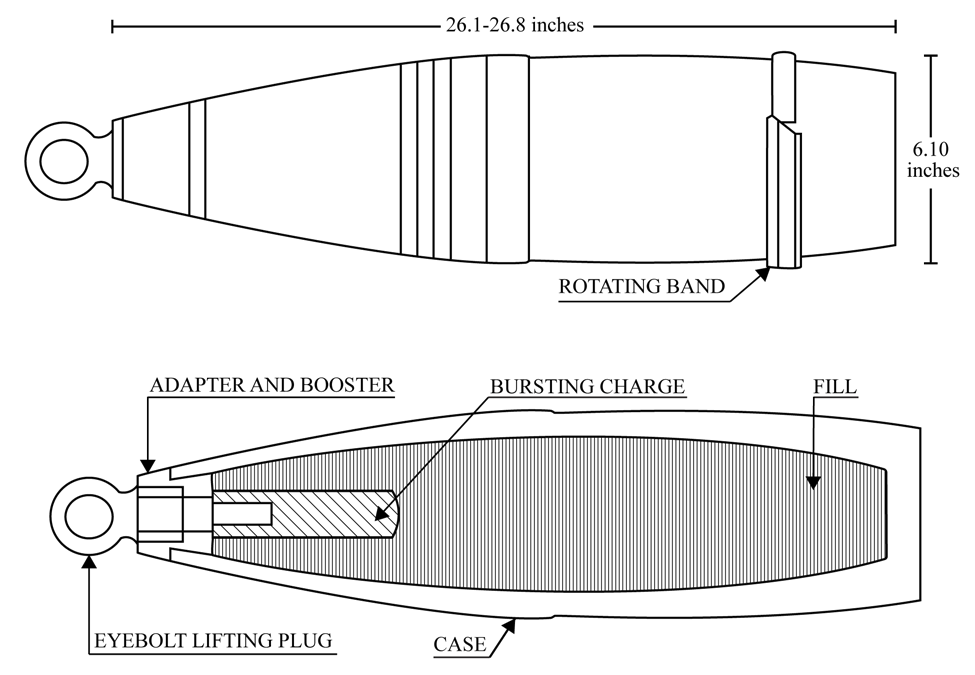
Description
This round consisted of the body, which contained the agent, the gaine tube (adapter and booster casing), which screwed into the nose of the round and contained the bursting charge. The bursting charge comprised a small quantity of high explosive sufficient to detonate the round and disperse the agent. Since most of the agents used in the round were liquids, they expanded when heated. A space or void was left for this expansion by only partially filling the round. The Mk VII had two driving bands; the others had one.
The Mark VII is the designation for the projectile that is fired from the gun rather than the howitzer. The Mark II howitzer projectile was modified for use in the 155 millimeter Gun (Mark VII). The modified projectile had two driving bands as compared to one for the howitzer round. A 155 millimeter semi-steel projectile was also developed which differed from the projectile only in reduce capacity of the agent fill.
One of three fuzes were normally used with this round: the American Mk III; the French IAL, Model 1916; and French IA, Model 1915. The nose was tapered to accommodate the French fuzes.
Functioning
No information about functioning.
Hazardous Components
No information about hazardous components.
See Also
Nothing else to see.
Source(s)
Old Chemical Weapons and Related Materiel Reference Guide (2018)
Old Chemical Weapons Reference Guide (1998)
TM 9-1904, Ammunition Inspection Guide (1944)
