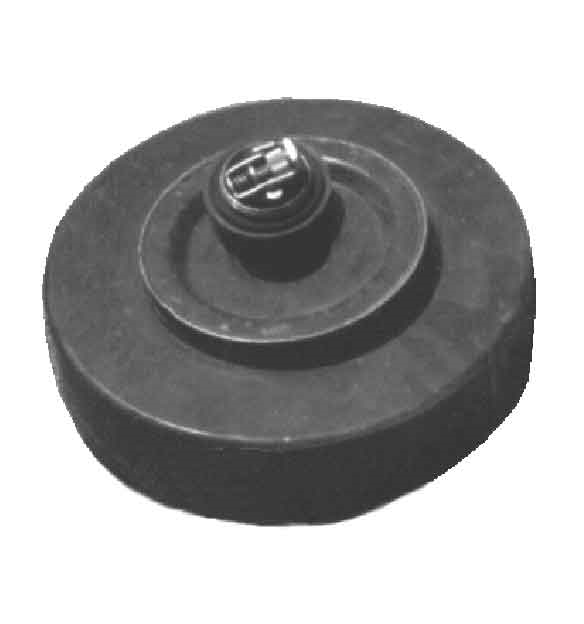
Description
The UKA-63 is a cylindrical mine with a plate-charge lethal mechanism.
The UKA-63 is multipurpose in that it can operate as a belly-attack, track-attack, or side-attack mine with effective ranges from 0 to 50 meters. The plate-charge will probably have only limited success against tank armor when used in the side-attack mode but would be very successful against lightly armored vehicles. The size of this mine is consistent with that of other mines manufactured by the former Warsaw Pact countries. The UKA-63 can be emplaced mechanically as well as manually and by means of a chute. Although not expected to be encountered, there is a whole family of other fuzes designed for use in this mine, including a tilt-rod fuze. The UKA-63 is a metallic-cased cylindrical mine which produces its effect by means of explosively formed fragments. Few technical details are known, but comparative analysis of this and other similar mines has yielded some information. It is reported that four fuzing schemes are possible of which only a tilt-rod fuze is known. Other candidate fuzes are pressure, seismic, magnetic, and electrically fired command detonated. The UKA-63 is unique in that it can supposedly operate as a belly-attack, track-attack, or side-attack mine with effective ranges from 0 to 50 meters. Penetration is unknown. The size of this mine is consistent with that of other former Warsaw Pact mines, which can be emplaced mechanically as well as manually and by means of a chute. Counter-countermeasures are reported but only in general terms; counterblast and antidisturbance features are suspected. A training version is available.
The mine is OD green.
Functioning
No information about functioning.
Hazardous Components
No information about hazardous components.
See Also
Nothing else to see.
Source(s)
Afghanistan Ordnance ID Guide, Volume 1 (2004)
