Description
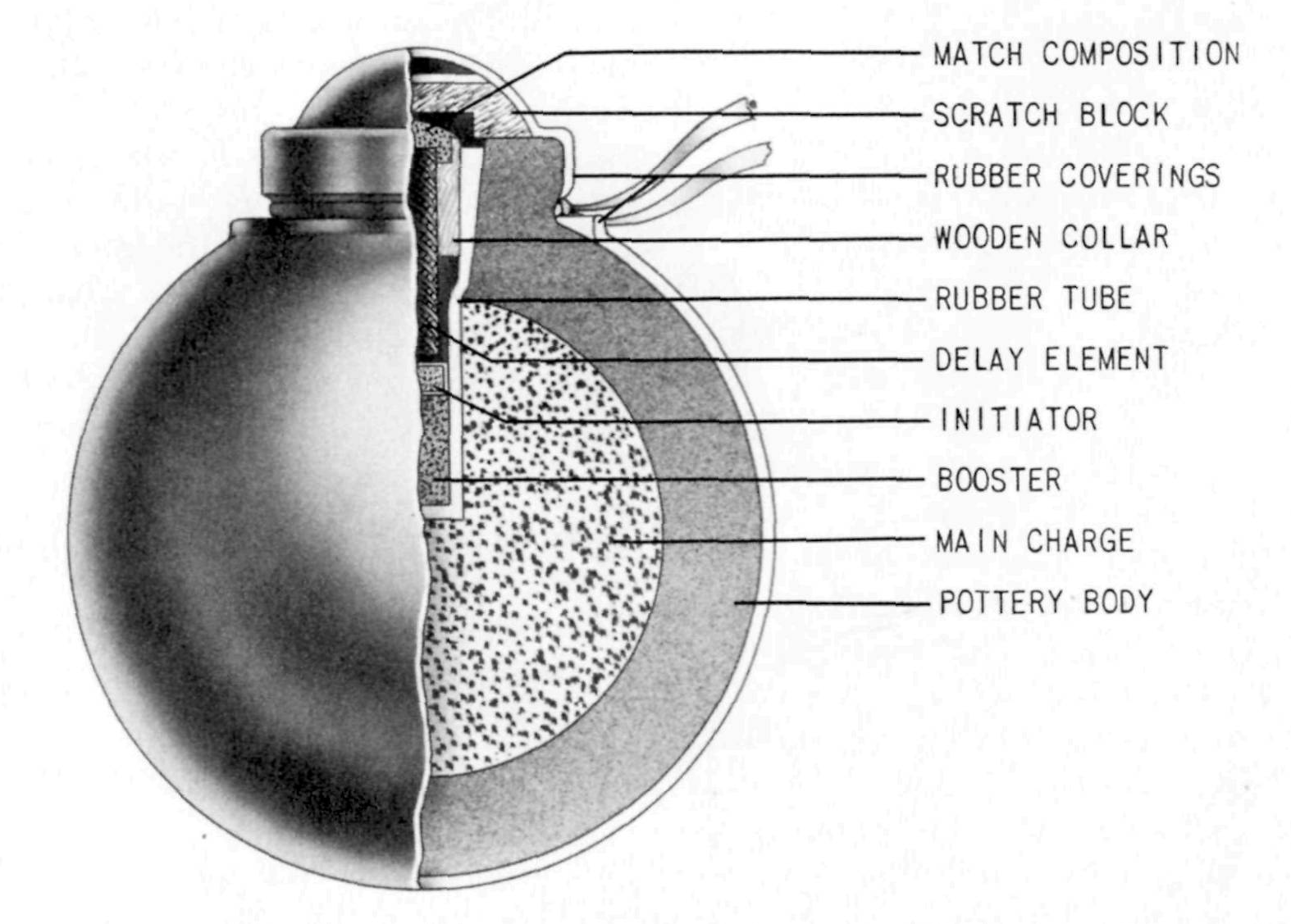
Except for the neck at the top, the grenade is spherical, consisting of two hemispheres baked together. The pottery body is light brown in color, lightly glazed inside and out. The grenade is encased in a straw colored rubber sack which serves as waterproofing and permits the thrower to take a better grip.
The ignition system consists of a match composition, a 4 or 5 second delay element, a lead azide initiator, and a tetryl booster. All but the match composition are encased in a rubber tube which is lacquered into the neck of the grenade. The upper portion of the delay element is surrounded by a wooden collar, the top of which is covered with the match composition.
A wooden scratch block is seated on top of the neck of the grenade. It is held in place by a small rubber sack which snaps around the neck of the grenade. This sack serves a second purpose in waterproofing the ignition system.
A cloth band tied around the neck is probably used for carrying.
This grenade appears to be made of the same type pottery as the Type 3 pottery land mine, and like the land mine, uses Type 88 explosive. For these reasons it may be assumed to be a Navy weapon.
The color of the grenade may vary from white to dark brown, and the exterior may be glazed or unglazed.
Functioning
The small rubber sack is removed from the top and the scratch block is struck on the protruding match composition, igniting the delay element. The grenade is thrown and explodes after a 4 or 5 second delay.
Hazardous Components
Filler - Type 88 explosive, 3.5 oz (98 grams)
Physical Data
Diameter - 3 in (76 mm)
Height - 4 in (102 mm)
Weight - 16 oz (448 grams)
Body material - Terracota
See Also
Nothing else to see.
Source(s)
OP 1667, Japanese Explosive Ordnance, Volume 1 (1946)
Catalog of Enemy Ordnance Materiel (1945)
CINCPAC-CINCPOA Bulletin 55-45, Japanese Infantry Weapons (1945)
