Description
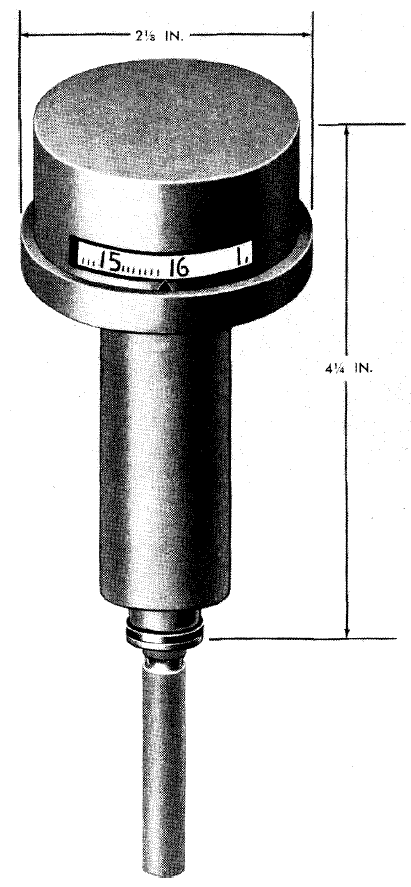
These fuzes are of the delay, mechanical or electrical, spring-loaded striker type, with a clockwork mechanism. The ChMV 10 has a 10-day delay mechanism, while the ChMV 16 has a 16-day delay mechanism. The only difference in appearance is the numbering on the dials. The numerals indicate days and the divisions between numerals indicate 2 hours each. The clockwork is contained in the mushroom shaped head of the fuze. Geared to the clockwork is the striker-release lever which holds the spring-loaded striker under tension in the narrow base of the fuze. A standard MD 2 detonator assembly or an electric contact cap with leads for wiring into an electrical circuit may be screwed into the base of the fuze and the joint made watertight by a rubber washer. The top of the fuze is closed with a threaded cap, made waterproof by a rubber washer. A glass window is located in the side for reading the time-setting dial. The World War 2 models of this fuze had a cardboard body and were about 3 7/8 inches in length (without the detonator) and 2 inches in diameter. Recent models of this fuze have been found in Korea and have a steel clock housed in a bakelite body. They measure 4 1/4 inches in height and 2 1/8 inches in diameter.
The fuze is used for setting off delayed-action charges in areas given over to an opposing force.
Functioning
After lapse of preset delay period, the striker-release lever trips the spring-loaded striker which either fires the MD 2 detonator assembly or closes the circuit between the two contacts on the top of the contact cap.
Hazardous Components
No information about hazardous components.
Physical Data
No additional physical data available.
See Also
Source(s)
